How to trade meme coins like a top-tier Solana scalper without blowing your account
Want articles like this for your own video to promote it on YouTube and Google? Order them through the Telegram bot @sat_sit_bot. Articles with your video embedded are written and posted by the bot itself — on popular topical sites (no ads). Free trial — 50 articles.
· based on the channel Ethan Prosper
Key takeaways
- Session in the video: roughly +200 SOL on the first two trades (Lobo, 1%) and about +80 SOL on Mosaic AI, plus a reported +$15K on an Elon/Grok-themed bot coin.
- Top meme coin scalpers run 10+ hour sessions on fresh Solana pairs — the highest-difficulty style, not the default one.
- Trades are executed on Solana terminals such as Padre, Axiom and BullX, with pump.fun as the usual launchpad for new pairs.
- Copy-trading a top wallet is not a shortcut: you inherit their entries, their size and their exit speed, which you cannot match manually.
- Position sizing, a written invalidation level and a hard daily loss cap matter more than picking the next 100x.
Meme coin trading is short-horizon speculation on tokens with no cash flow, usually launched on pump.fun and traded on Solana terminals; you make money by buying early liquidity and selling into demand faster than the crowd, and you lose it by sizing too big and holding too long. The realistic version of this skill is not a lottery ticket but a repeatable process: a watchlist, fixed risk per trade, a written exit, and a hard stop for the day. You can follow the same execution stack the traders in Ethan Prosper's session used by registering on Padre terminal, the platform featured in the video.
What the session actually shows about meme coin P&L
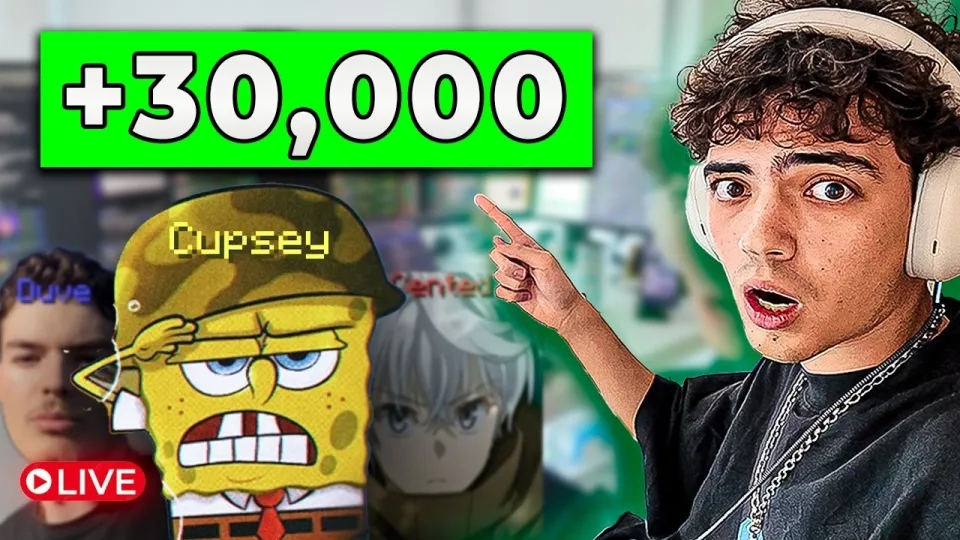
The video documents a live session between Ethan Prosper and a guest trader known as Cupsey, and the numbers are the point: roughly +200 SOL across the first two trades (Lobo and a token called 1%), about +80 SOL on Mosaic AI, and a reported +$15K on an Elon/Grok-themed bot coin. A single trade on a "magic internet money" dev coin and a "cheese coin" round out the run. Viewers did the math in the comments — one noted that 350+ SOL is an annual salary earned before the sky turned orange — and that reaction is exactly the right frame for this article: the result is real, but it is the output of a full-time desk, not of a five-minute app download.
What separates that session from a random degen afternoon is repetition. The traders are not guessing once; they are cycling through dozens of fresh pairs, taking small edges, and cutting anything that does not move. The headline P&L is the sum of many decisions, most of which are boring.
The scalper workflow from launch to exit
The workflow behind meme coin scalping is a fixed loop: find the pair, check the contract and the holder map, size the position, set the invalidation, and exit on a rule rather than a feeling. In practice it looks like this:
- Source the pair. Fresh launches on pump.fun and migration alerts on Solana aggregators. The traders in the video work from terminal feeds, not from social media timelines.
- Check the contract before the chart. Mint authority revoked, freeze authority revoked, liquidity locked or burned, top-10 holders not dominated by one cluster. If the deployer wallet is linked to a rug history, skip it.
- Read the first minutes of the chart. A healthy launch prints higher lows with volume expanding on green candles. A launch that spikes vertically on one wallet's buy and then bleeds is a distribution setup.
- Size so that a zero does not matter. A common rule among Solana scalpers is 0.5–2% of the bankroll per attempt on unproven pairs, scaling up only after the trade is in profit.
- Write the exit before entry. Take partials into the first vertical push, trail the rest, and accept that you will leave money on the table. The guest's results came from many small exits, not one perfect top.
- Stop for the day at a fixed loss. Two or three stopped trades in a row means the market regime does not match your style today.
Why copy-trading a top wallet rarely reproduces the result
Copy-trading a profitable meme coin wallet fails for most people because the edge is in execution speed and exit discipline, not in the token itself. When a top trader enters, you see the transaction after it lands; by the time your copy executes, price has moved, and when they exit into a thin book, your fill is worse. Several commenters on the video made the sharper version of this point — that the visible winners are the ones multi-walleting and dumping on slower buyers — and while that framing is cynical, it contains a real warning: the person whose trades you mirror has information and latency you do not.
A more honest use of a leaderboard wallet is as a research input. Track which wallets are early on tokens that survive 48 hours, study their entry size relative to liquidity, and note how fast they cut losers. Copy the process, not the position.
Common questions from traders watching this style
"What does 'faucets' mean?" In the Solana trading community, faucets are the small, repeatable income streams — referral rewards, airdrops, launch incentives, terminal cashback — that fund experimentation. They are not the strategy; they are the bankroll that lets you keep taking shots while you learn. Treat them as risk capital, not as salary.
"How much do I need to start?" Enough that a total loss of your per-trade size does not change your month. On Solana, that often means starting with a fraction of a SOL per trade, because fees, priority tips and slippage eat small edges. The traders in the video operate at a scale most viewers cannot match, and the comment section's joke about being down to a last 1.3 SOL is the realistic starting point for most people.
"Do I have to trade this way to win?" No, and the most useful comment under the video says so directly: the featured traders are speed scalpers running 10+ hour days on brand-new pairs, which is the hardest style in the market. Larger-cap tokens, slower swing entries and waiting for post-launch consolidation are all legitimate — and far less punishing for someone with a job.
"Why do they use several terminals?" Different terminals surface different feeds: pump.fun for launches, aggregators for routing, and platforms like Padre, Axiom or BullX for execution speed and charting. The tool matters less than the rule set you apply inside it.
Risk rules that keep a meme coin account alive
Survival in meme coin trading comes from three hard limits: maximum size per trade, maximum loss per day, and a cooldown after a win streak. Set a per-trade cap at 1–2% of the bankroll while you are learning, and never add to a losing position on a token with no fundamental floor. Cap daily losses at a level you decided while calm — commonly 5–10% of the account — and close the terminal when you hit it. After three consecutive wins, reduce size rather than increase it, because overconfidence is the most expensive position in this market.
Liquidity is the second constraint. A token with a few thousand dollars of liquidity cannot absorb a large exit without moving price against you, which is why the visible P&L in fast sessions is often smaller in cash than in SOL-denominated screenshots. Check the pool depth before you size, not after.
Finally, separate the wallet. Keep trading capital in a dedicated Solana wallet that holds nothing else, and move profits out on a schedule. The wallets shown in the video are public for a reason — they are working accounts, not savings accounts.
Useful links
- Padre trading terminal — registration and execution platform used in the session
- Ethan Prosper — all links and resources
- Cupsey on X — the guest trader's account
- SOLMAFIA — free Discord community
- Pastel — paid Discord for traders
The takeaway
Meme coin trading rewards process over prediction: the traders in this session made their money by cycling many small, rule-bound decisions on fresh Solana pairs, not by calling one lucky launch. The +200 SOL start, the +80 SOL Mosaic AI trade and the +$15K bot-coin win are the visible output of long sessions, fast terminals and disciplined exits — and the comment section's mix of awe and scepticism captures both sides of that reality. If you want to test the workflow yourself, start small on Padre, cap your daily loss before you open the chart, and treat every leaderboard wallet as a case study rather than a signal service. Ethan Prosper's channel is the source of this breakdown and the place to see the full session replayed step by step.
Source: I Traded With The World’s #1 Memecoin Trader · Markdown version
Questions & answers
Is meme coin trading actually profitable, or is the video edited to look easy?
The session shows real trades and real wallet activity, but it is a highlight of a full-time scalper's day, not an average outcome. Profitability in this style comes from many small edges, strict sizing and fast exits; most beginners lose because they size up after seeing screenshots like these.
What is the minimum capital needed to start trading meme coins on Solana?
There is no official minimum, but practical constraints matter: transaction fees, priority tips and slippage make very small trades inefficient. A reasonable start is an amount you can lose entirely without changing your finances, sized at 1–2% per trade rather than all at once.
Should I copy-trade the wallets shown in the video?
Copy-trading lags the original trade by seconds and executes into a worse price, especially on thin new pairs. Use those wallets to study entry timing, sizing relative to liquidity and exit behaviour instead of mirroring positions blindly.
Do I need a special terminal to trade meme coins?
You can trade through most Solana wallets, but terminals such as Padre, Axiom or BullX provide faster execution, better charting and launch feeds from pump.fun. The tool speeds up execution; it does not replace a written risk plan.